
LARNAKA, 12th of May. The 16th Culture Next Conference brought 168 participants to Larnaka to discuss the future of artists and cultural ecosystems across Europe. The event focused on empowering artists, solidarity, care and culture as a safe space in times of uncertainty and conflict, while Larnaka’s overarching theme, Common Ground, became deeply reflected in the conversations and ideas explored throughout the event.
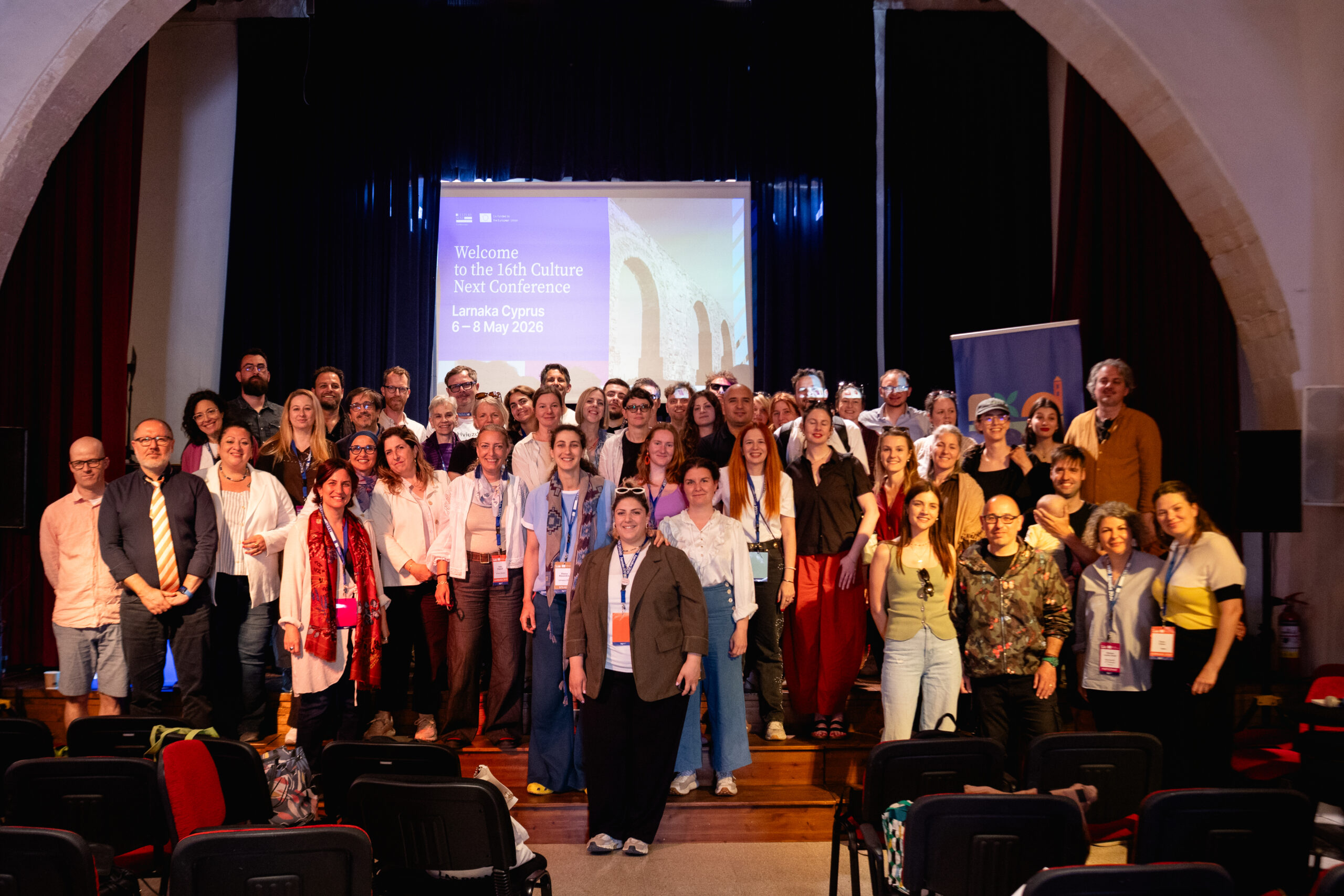
Larnaka, common ground for over 160 participants at the 16th Culture Next Conference
The 16th Culture Next Conference, hosted by Larnaca between 6–8 May 2026 under the theme “Empowering the Cultural & Creative Sectors”, brought together 168 participants from across Europe and beyond, alongside more than 70 local stakeholders, the strongest local participation ever recorded at a Culture Next conference.
Representatives of European cities, cultural institutions, policymakers, local artists, researchers and international organisations gathered in Larnaka to discuss not only cultural policies and systems, but also the people behind culture itself: the artists, cultural workers and creative communities facing increasing instability, precarity and geopolitical pressure. Three cities where present for the first time at a Culture Next Conference: Caceres (Spain), Kourion (Cyprus) and Nijmegen (The Netherlands).
Across two intense days of panels, workshops, informal exchanges and public discussions, one idea emerged repeatedly: culture is not a luxury, but a form of resilience, solidarity and human connection.
Ahmed Tobasi, Artistic Leader at Artists On the Frontline, reflected on his own experience of conflict, displacement and the role of culture in difficult times, stating that “culture and art is the only weapon we have.”
Another emotional intervention came from Yulia Khomchyn, from Lviv (Ukraine), who described the realities faced by artists living close to the frontlines of war: “Every night we risk to be killed. We seek culture as a safe space that gives us time.”
The conference opened with internal strategic meetings dedicated to the present and future of the network, including discussions led by the Culture Next management team and SDG Lab cities exploring AI-powered tools for measuring the impact of culture.
The official opening evening welcomed participants through a reception hosted by the Mayor of Larnaka, Andreas Vyras, together with the Mayor of Limassol, Yiannis Armeftis, and Giorgos Papageorgiou, Director General at the Deputy Ministry of Culture in Cyprus.
One of the first key moments of the conference was the keynote by Mary Ann DeVlieg, focused on artists’ rights, solidarity and practices of care, followed by the panel “Voices from the Field”, moderated by Kelly Diapouli, featuring Ahmed Tobasi, Eleana Alexandrou, Nurtane Karagil and Yulia Khomchyn. The discussion brought forward the lived realities of artists working in fragile contexts, conflict areas and politically difficult environments, transforming the conference into a space of empathy, testimony and reflection.
Another major highlight was the panel “Toward an Equitable, Fair Creative Economy: Reflections on Models and Approaches”, moderated by renowned cultural policy expert Tom Fleming, Director of TFCC and Culture Next Policy Expert. The session brought together Alma Salem, Carla Rogers and Marilyn Gaughan Reddan, exploring innovative models for supporting artists and cultural professionals — from Ireland’s Basic Income for the Arts scheme to pan-Arab cultural empowerment initiatives and European cultural innovation programmes.
The conference also hosted the panel “Mediterranean Cultural Cities Network (MCCN). Bridging Shores, Building Futures”, which explored how the Mediterranean region can become not a geographical boundary, but a shared space for cultural innovation, dialogue and cooperation. Moderated by Rita Orlando, General Coordinator of Matera 2026, the discussion brought together Stefano Dotto (European Commission), Genci Kojdheli (Municipality of Tirana) and Agnès Ruiz (United Cities and Local Governments), focusing on the role of culture in sustainable development, peace-building and social cohesion across Mediterranean cities facing shared contemporary challenges.
Dedicated sessions for Culture Next full members included Mobility Matchmaking meetings aimed at generating new partnerships and collaborations between cities, while “Next on Culture Next” offered insights into the evolving role of the network in today’s European context and the growing interest from new member cities.
At the same time, local cultural actors from Larnaka presented inspiring projects and initiatives, highlighting the vitality, creativity and commitment of the city’s cultural scene as it prepares for its journey toward European Capital of Culture 2030.
As Culture Next continues its policy and advocacy work across Europe, the outcomes of the Larnaka conference will contribute to future recommendations and initiatives supporting artists and cultural professionals in European cities and beyond.
The next Culture Next Conference will take place this autumn, between 7-9 of October in Oulu 2026, European Capital of Culture (Finland).
